Use case: Pain
Talking Buttons for describing pain and discomfort
Pain is one of the hardest things to communicate when speech is limited, slow, or unavailable. People may know something is wrong, but struggle to explain where it hurts, how strong it is, what kind of pain it is, or what changed. That can delay help and increase frustration.
Talking Buttons can make pain communication clearer by turning common descriptions into simple speaking buttons. That can help in home care, hospital, school, travel, therapy, or any situation where pain needs to be described fast and without too much spoken effort.
What pain boards should cover
Pain is more than one word
A useful pain communication board should go beyond just yes or no. In many cases, people need to say where the pain is, whether it is getting worse, whether it is sharp, burning, dull, sudden, or constant, and whether they need help right now. Even a very simple set of buttons can make that easier.
For some people, the best approach is one board with body areas and a few intensity options. Others may need separate boards for urgent care, recurring pain routines, or questions about medication and what helps.
- Body location and side of the body
- Intensity such as little, more, severe, or urgent
- Type of pain such as sharp, burning, pressure, or cramp
- Timing phrases such as now, longer, sudden, after eating, or after walking
Why Talking Buttons fits
Pain communication should be quick and easy to repeat
Talking Buttons can support pain description because it keeps the interaction very direct. Large buttons are easier to tap under stress, and the spoken output can help make the message clear to the other person right away. That is helpful when energy is low or when a repeated explanation would be exhausting.
Because boards can be customized, family members and support people can also tailor them to a known condition or repeated situation. A general pain board is a good start, but a person can later add more specific symptom boards if needed.
- Fast access to urgent messages
- Simple pain scales and body-location choices
- Useful in home care, appointments, and hospital
- Can be combined with basic needs or doctor-visit boards
Board ideas
Useful board directions for pain communication
A pain board works best when it stays readable. Instead of placing every possible symptom on one screen, it can help to split the setup into a body-location board, an intensity board, and an action board. That keeps communication faster.
If pain is part of repeated care, routine boards can also include what helps: rest, water, medication, repositioning, food, quiet, warmth, or calling a specific person.
- Body map or body-area board
- Simple pain intensity board
- What helps or what makes it worse board
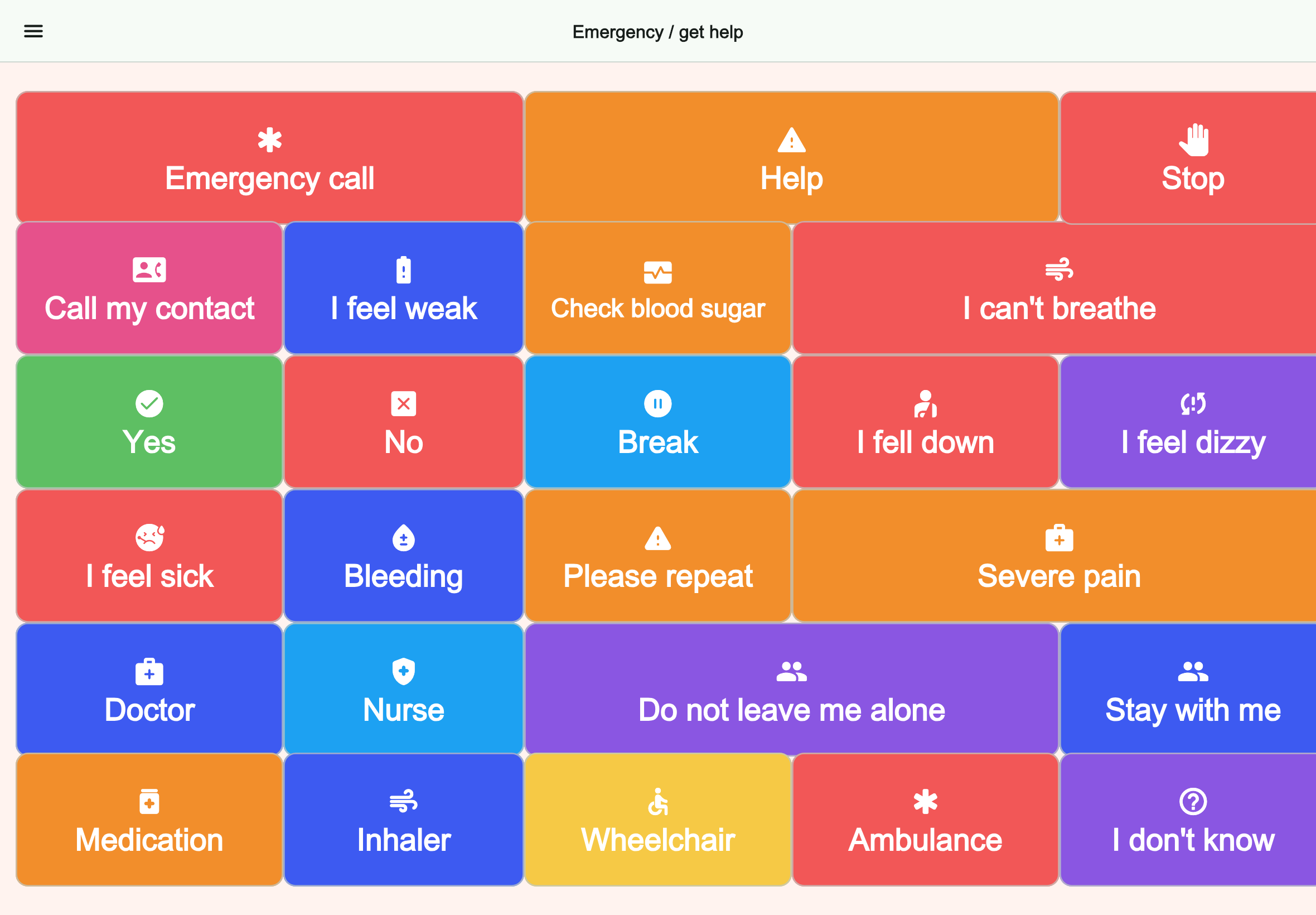
- Urgent action board for help, nurse, doctor, rest, water, or medication
Matching boards
These boards fit this use case especially well
The guides should lead straight to a usable board. The boards below already cover the context described here and can then be adjusted further inside the app.


FAQ
Frequently asked questions
Can Talking Buttons help someone describe pain?
Yes. Boards can be set up for body location, pain intensity, type of discomfort, and short urgent messages.
Do I need one large pain board?
Not necessarily. Smaller boards for location, intensity, and action are often easier to use than one crowded screen.
Can pain boards be useful outside hospital?
Yes. They can also help at home, in care settings, during appointments, at school, or while traveling.
Next step
Make pain easier to describe
Use Talking Buttons to build simple boards for location, intensity, urgency, and what kind of help is needed.