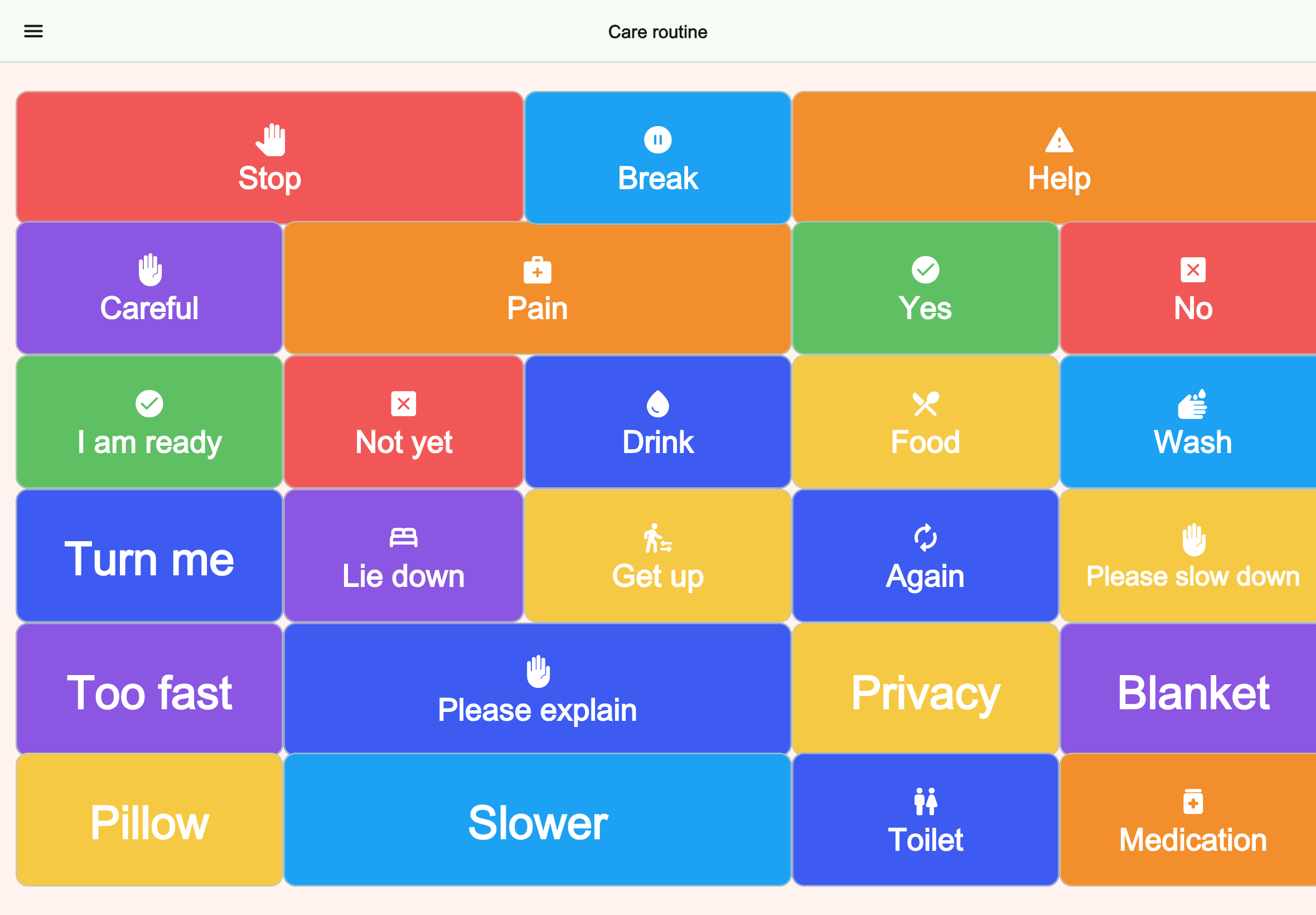
Use case: Care
Talking Buttons for care and daily support settings
Care communication is often built from repeated daily moments: getting up, washing, dressing, eating, drinking, medication, pain, rest, positioning, going out, and asking for help. When speech is limited or inconsistent, those moments can become slower and more frustrating for everyone involved.
Talking Buttons can support care settings with simple, repeatable boards that reduce uncertainty. The app can help the person receiving care express choices and needs more clearly, while also helping support people respond faster and with less guesswork.
Care routines
Care communication works best when it matches real routines
A communication tool in care needs to follow the day as it really happens. That means boards for morning routines, food and drink, personal care, transfers, pain, fatigue, visitors, medication, and short comfort requests. These moments repeat, which makes them especially suitable for well-structured boards.
In many care settings, the most useful communication is not elaborate. It is practical and immediate: yes, no, later, now, too much, stop, again, cold, warm, toilet, thirsty, pain, tired, family, and help.
- Morning and evening care routines
- Food, drink, toilet, hygiene, and dressing support
- Pain, fatigue, and comfort communication
- Short phrases for family, staff, and daily activities
Why Talking Buttons fits
Boards can be shaped around stable daily patterns
Talking Buttons is useful in care because it can mirror the structure of the day. Separate boards can be created for meals, transfers, rest, hygiene, medication, outings, or pain. That makes communication more specific without making each individual board too crowded.
Because the app is customizable, teams and families can also decide how visual it should be. Some people benefit from text and icons, others from photos, and others from very simple large words with speech output.
- Custom boards for repeated care routines
- Supports text, icons, and photo-based communication
- Useful in home care and supported settings
- Offline-first after installation
Board ideas
Useful care-related board directions
A strong care setup often starts with one board for basic daily needs and one board for personal comfort or pain. After that, specific routine boards can be added based on the person’s day and the care environment.
If multiple people support the same person, simple boards also create more consistency. The same words and buttons stay available across staff changes, family visits, and different times of day.
- Basic needs and comfort board
- Food, drink, toilet, hygiene, and dressing board
- Pain and medication board
- Routine board for visits, activities, and rest
Matching boards
These boards fit this use case especially well
The guides should lead straight to a usable board. The boards below already cover the context described here and can then be adjusted further inside the app.

Home and daily life
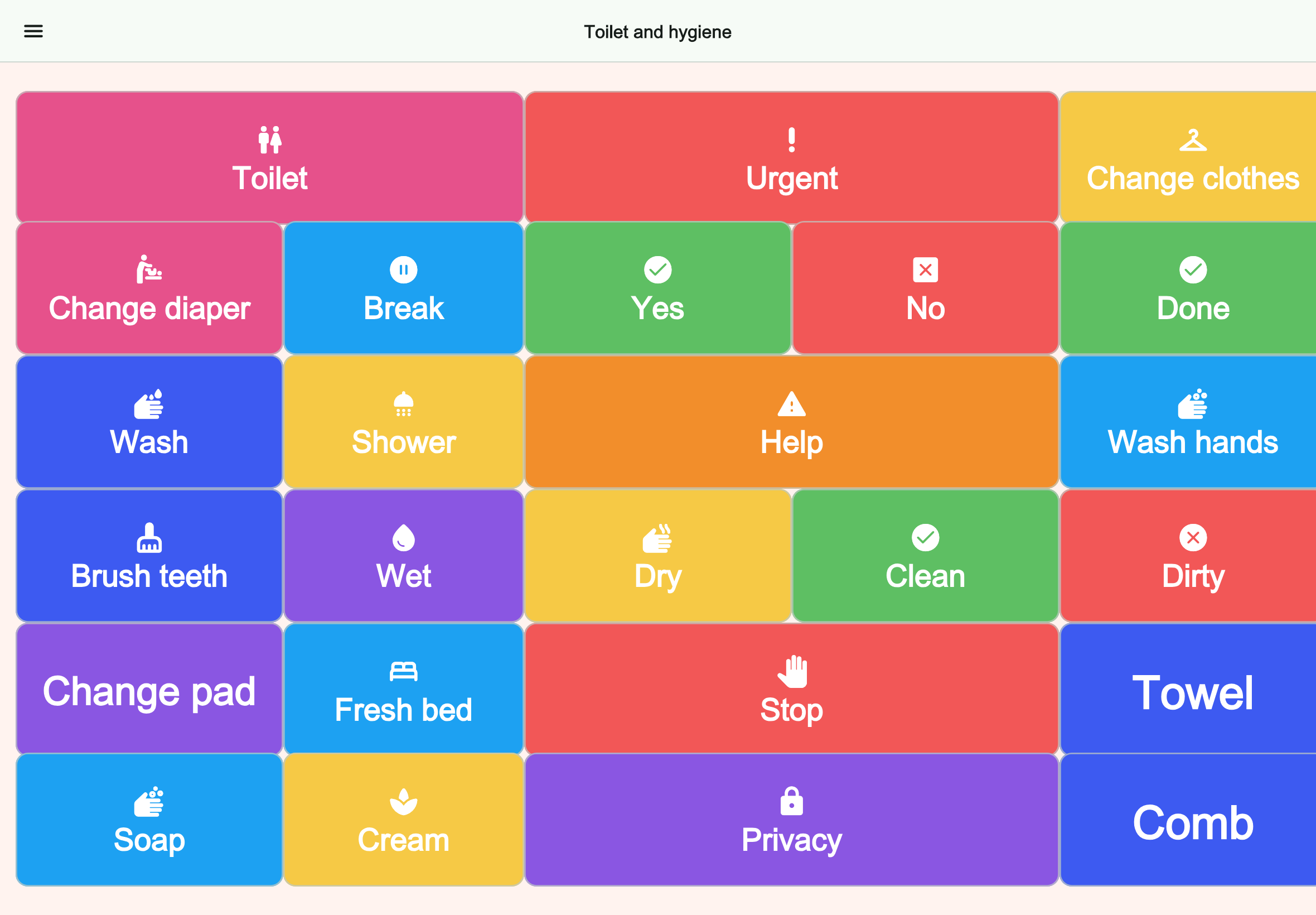
Toilet and hygiene
Makes urgency, privacy, and practical hygiene steps immediately visible.
Health and care
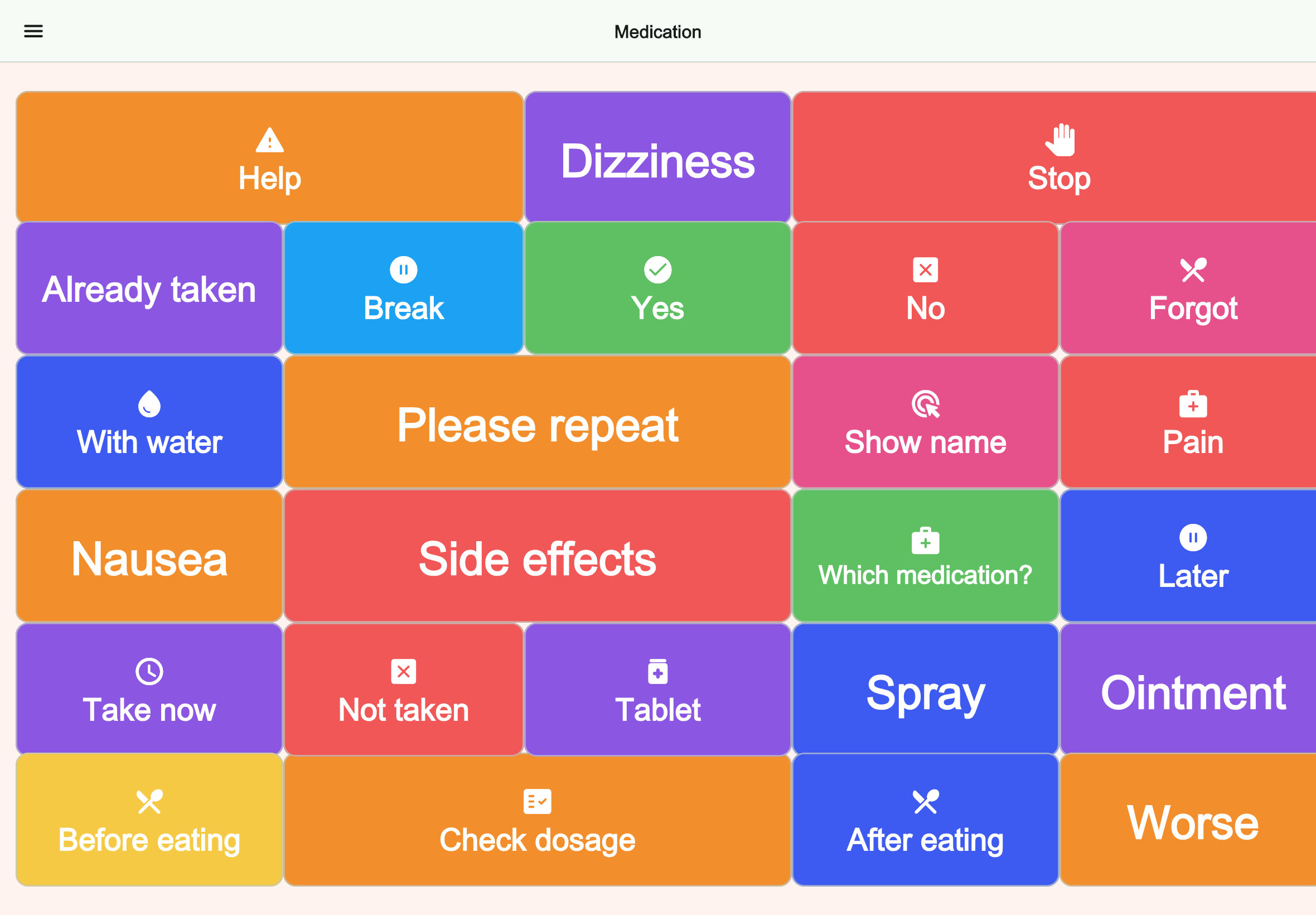
Medication
Prioritizes taking medicine, side effects, timing, and medication support.
FAQ
Frequently asked questions
Can Talking Buttons be useful in care settings?
Yes. It can support repeated daily care routines, comfort requests, pain communication, and simple choices.
Is it only for professional care?
No. It can also be useful in home care and family-supported daily routines.
What is a good first board for care communication?
A basic needs board plus a comfort or pain board is often the most practical first step.
Next step
Support daily care with clearer requests and choices
Use Talking Buttons to build practical boards for repeated routines, pain, comfort, and everyday support moments.