Health and care
Doctor visit
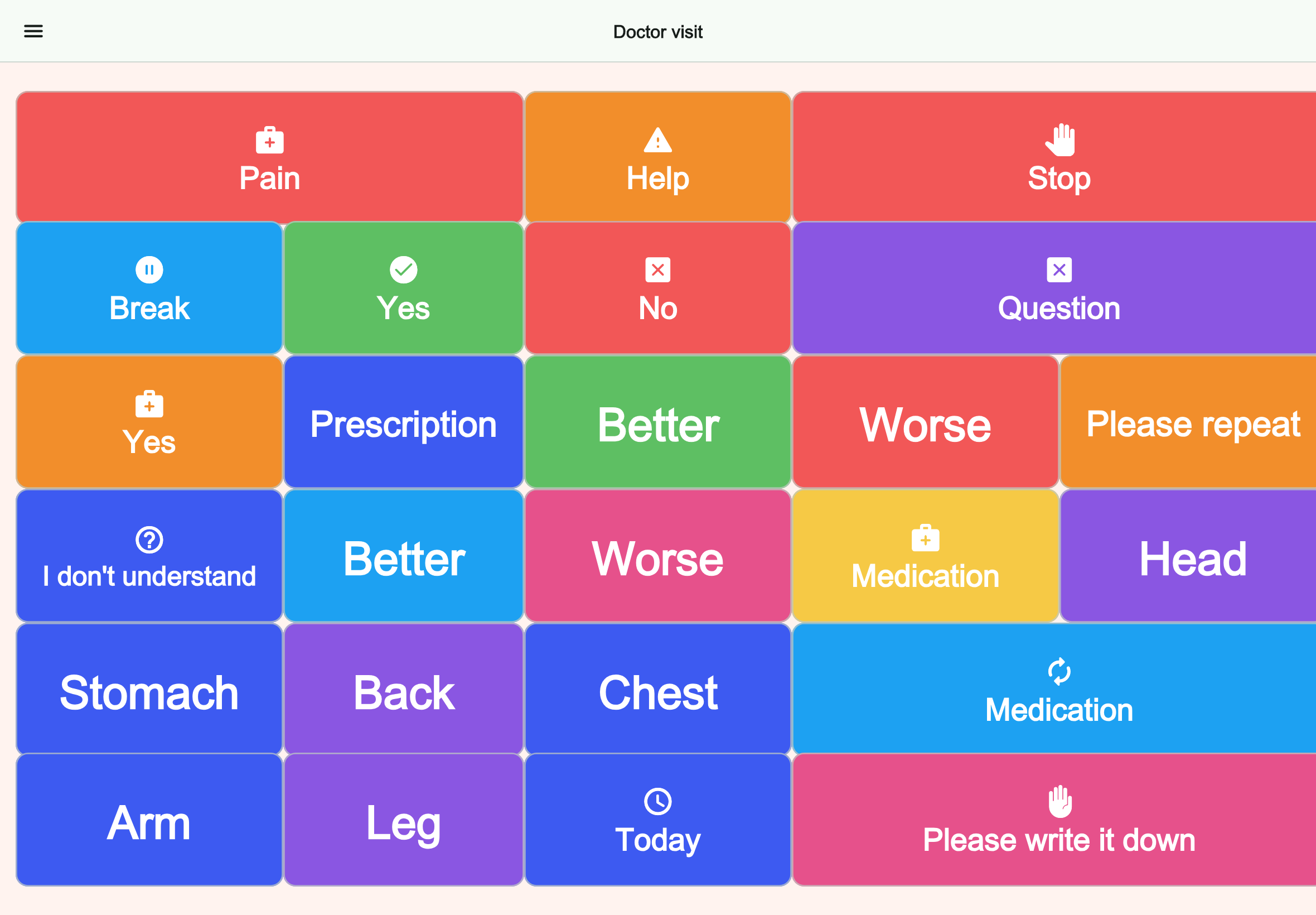
Clarifies symptoms, progress, understanding, and prescriptions at the doctor.
Use case: Doctor visit
Doctor visits can be difficult when someone needs time to speak, loses words under pressure, or cannot easily describe symptoms in the moment. Appointments are often short, fast, and full of information. That makes preparation especially important.
Talking Buttons can support those moments with boards for symptoms, pain, timing, medication, practical questions, and simple answers. The goal is not to replace conversation. The goal is to make important information easier to express when time and stress are working against you.
Before the appointment
Many communication problems in appointments begin before the conversation starts. A person may know what they want to say, but once they are in the room it becomes harder to find the right words in the right order. A board with prepared questions and symptom phrases can reduce that pressure immediately.
This is especially useful when someone needs to explain where pain is, how long a problem has been happening, what makes it better or worse, or whether help is needed with medication, movement, eating, sleep, or daily care.
Why Talking Buttons fits
Talking Buttons works well for doctor visits because the boards can stay compact and practical. Instead of scrolling through a broad vocabulary, someone can tap a few prepared statements that matter for this exact appointment. That is especially helpful when appointments are stressful or tiring.
Family members or support people can also help prepare a board beforehand. That means the communication aid is already ready on the device when the appointment begins, rather than being improvised under pressure.
Board ideas
For appointment communication, simple structure matters more than volume. A focused symptom board and a focused question board are often enough for a strong first version. From there, you can add medication, mobility, pain, or follow-up routine boards.
If the same appointment type happens regularly, the board can become more specific over time. That makes repeat visits faster and more consistent.
Matching boards
The guides should lead straight to a usable board. The boards below already cover the context described here and can then be adjusted further inside the app.
Health and care
Clarifies symptoms, progress, understanding, and prescriptions at the doctor.

Health and care
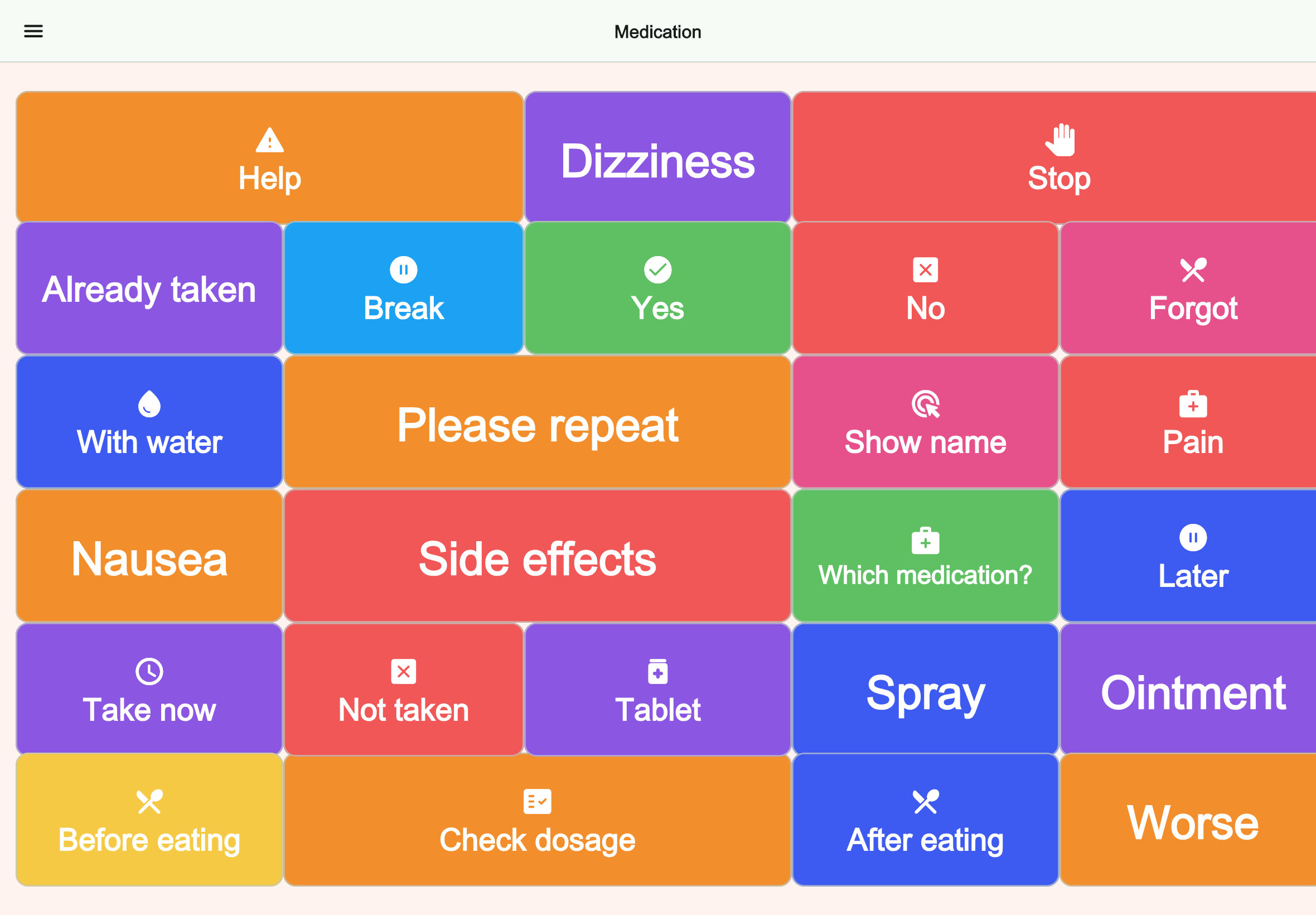
Prioritizes taking medicine, side effects, timing, and medication support.
FAQ
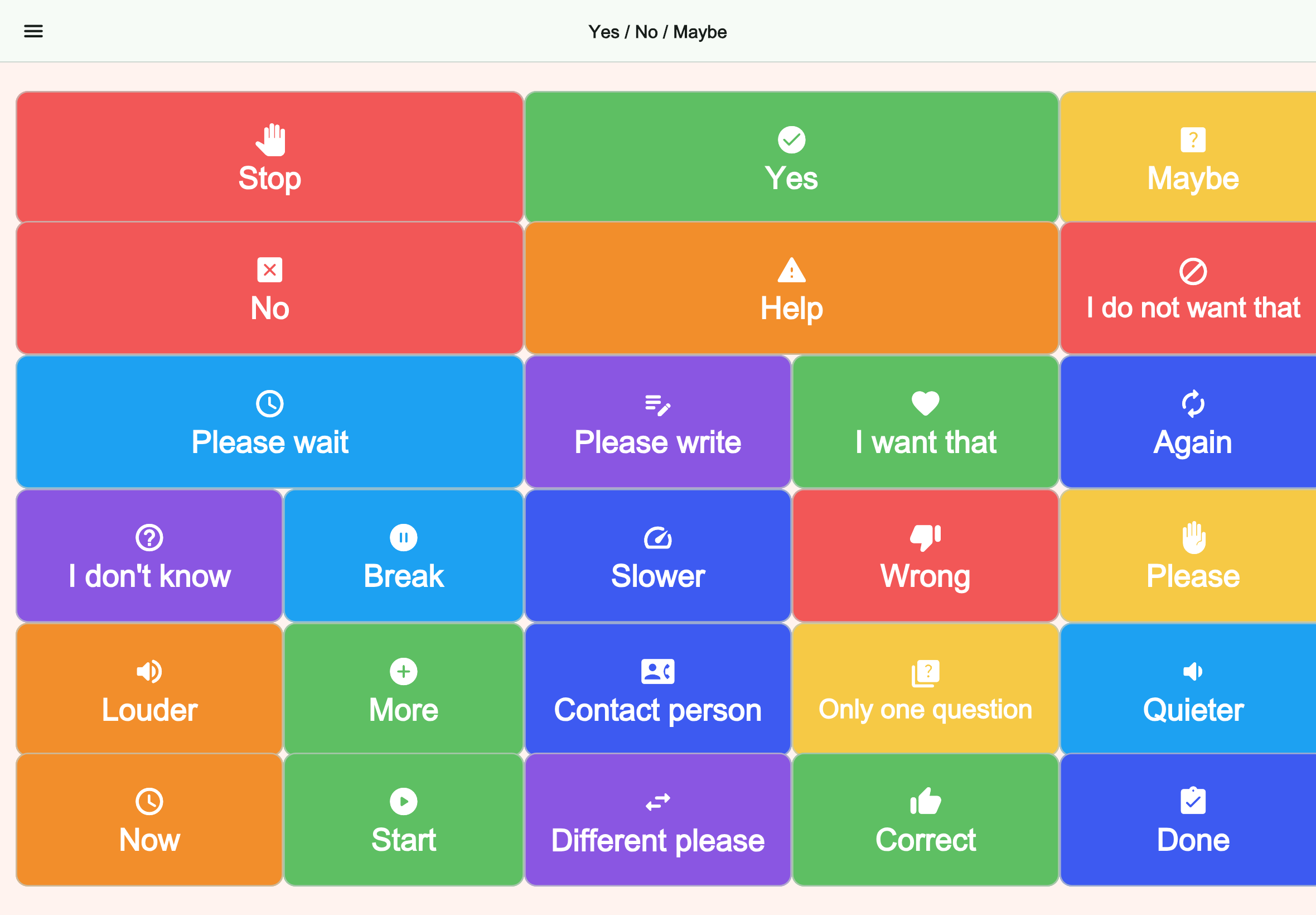
Yes. It can support symptoms, yes-no answers, pain description, medication questions, and other short communication tasks during appointments.
Usually yes. A prepared board reduces pressure and makes it easier to communicate the most important information quickly.
Yes. Talking Buttons supports multiple boards, so you can keep different setups for general practice, hospital follow-ups, therapy, or specialist visits.
Next step
Create Talking Buttons boards for symptoms, questions, medication, and short appointment conversations.