Use case: Basic needs
Talking Buttons for basic needs and simple communication
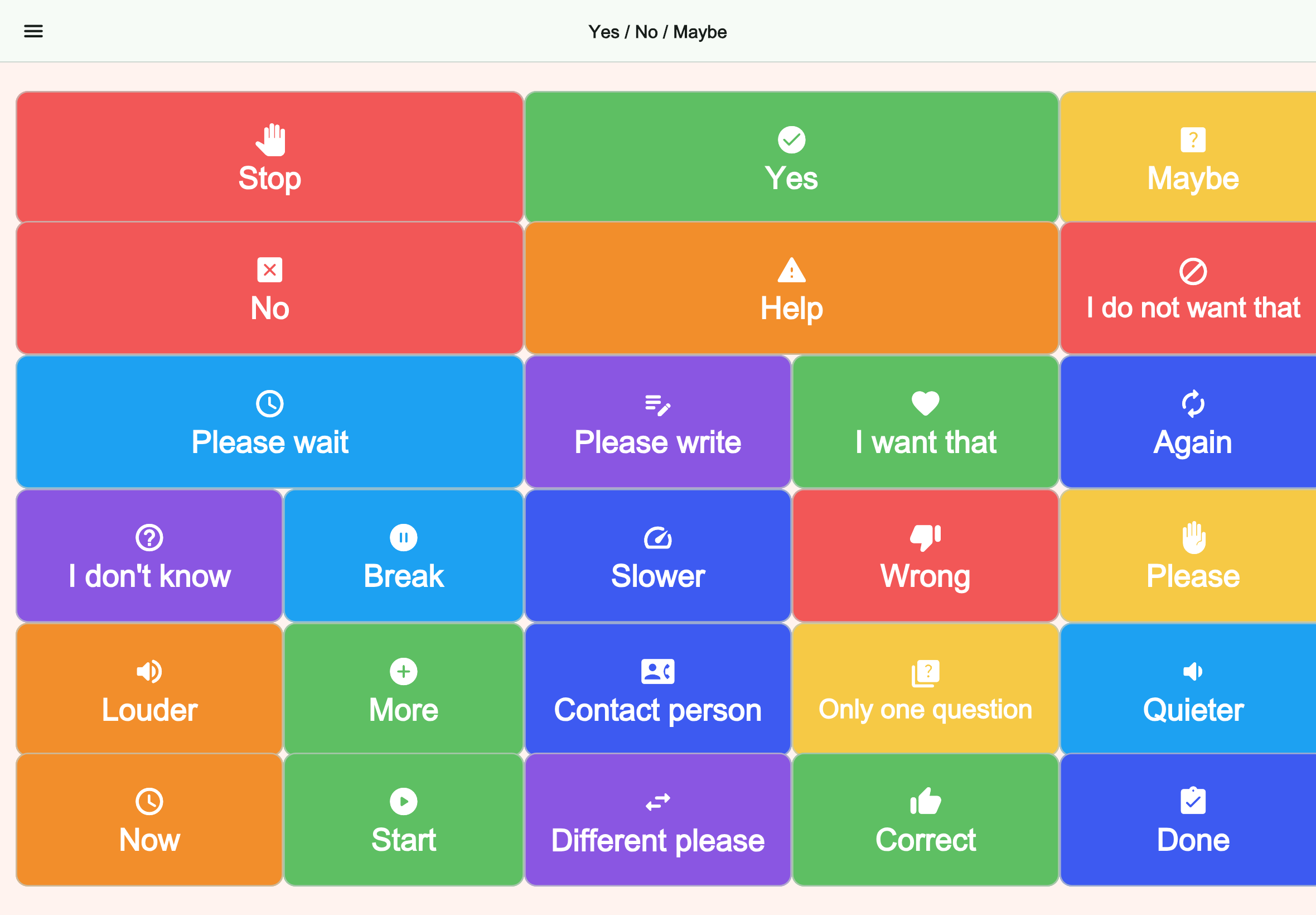
Sometimes the most important communication is also the simplest. Yes. No. Help. Toilet. Drink. Hungry. Stop. Again. Tired. Rest. When those words are difficult to say reliably, even a very small communication board can make a major difference in daily life.
Talking Buttons is well suited to this kind of setup because it can stay focused. Instead of building a large vocabulary system immediately, you can start with one basic-needs board that covers the words and requests used again and again.
Why basic needs come first
A small board can solve high-frequency problems
Basic-needs communication is often the strongest first step because it reduces everyday friction quickly. When someone can clearly say yes, no, help, drink, toilet, rest, or more, communication becomes more functional right away. That creates confidence and can guide which other boards should be added later.
These boards are also useful across many different settings. The same basic requests may be relevant at home, in school, during travel, in care settings, during appointments, and in hospital.
- Yes-no support
- Food, drink, toilet, and rest requests
- Help, stop, again, and finished phrases
- Simple comfort and daily choice communication
Why Talking Buttons fits
Basic-needs boards should stay easy to scan
Talking Buttons can keep a basic-needs setup very simple. Large buttons make common requests easy to find and repeat, and the device voice helps make the selection clear to the listener. That is especially helpful when the same short requests happen many times per day.
A basic-needs board is also a strong foundation for later growth. Once the first board works well, you can add situation-specific boards for hospital, school, travel, pain, autism support, care, or appointments.
- Large, high-frequency speaking buttons
- Easy to build around repeated everyday requests
- Useful as a first AAC-style setup
- Flexible enough to grow into more specific boards later
Board ideas
Useful first board directions for simple communication
A good basic-needs board should feel calm, not crowded. The strongest first version often includes only the most important needs and choices. That keeps scanning easier and makes the board more likely to be used consistently.
Later, you can split the setup into smaller related boards, such as food and drink, body comfort, yes-no, and daily routines.
- Yes-no and choice board
- Food and drink board
- Toilet, rest, and comfort board
- Help, stop, again, and finished board
Matching boards
These boards fit this use case especially well
The guides should lead straight to a usable board. The boards below already cover the context described here and can then be adjusted further inside the app.

Home and daily life
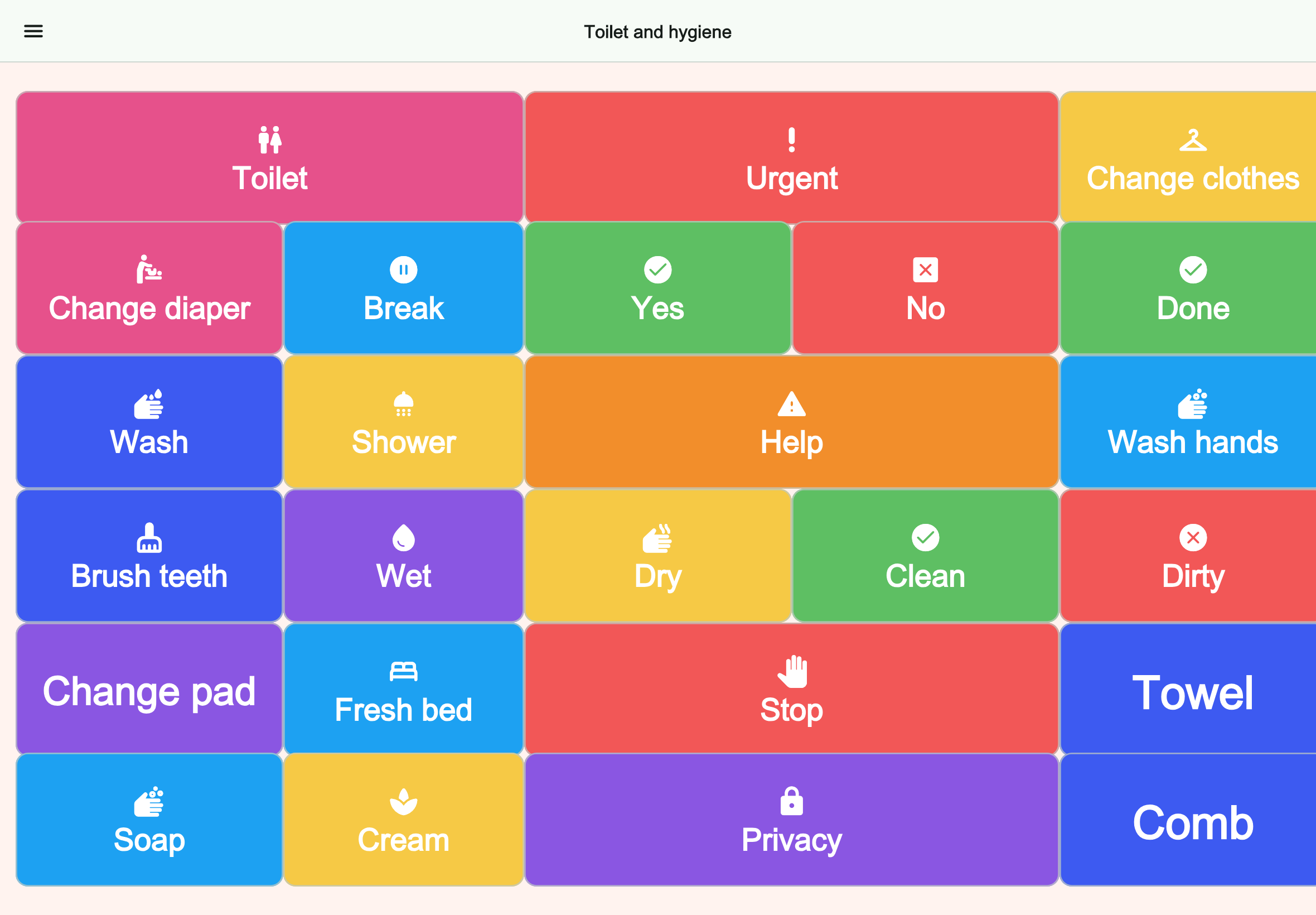
Toilet and hygiene
Makes urgency, privacy, and practical hygiene steps immediately visible.
FAQ
Frequently asked questions
Is Talking Buttons a good first board app for basic needs?
Yes. A simple board for yes-no and daily requests is one of the strongest ways to start using the app.
What should go on a basic-needs board first?
Common starting items are yes, no, help, drink, food, toilet, rest, stop, and again.
Can one basic-needs board be used in many places?
Yes. It can often be useful at home, in school, in care settings, during appointments, while traveling, and in hospital.
Next step
Start with the words used every day
Create a simple Talking Buttons board for yes-no, help, drink, food, toilet, rest, and other high-frequency requests.